

In the 2010s, our District faced a choice. To meet strict phosphorus limits as required by the our permit, we could either build a multimillion-dollar, energy-intensive treatment facility or invest directly in the health of our local waters and landscape. We chose the water and landscape.
Today, that choice is paying off in ways we never imagined. The Yahara WINS (Yahara Watershed Improvement Network) project has officially become the first in the nation to generate verified carbon credits under a new, science-based methodology for avoiding emissions by choosing watershed conservation over water infrastructure.
A national first for the Yahara River Watershed
On January 16, 2026, Regen Registry issued 24,143 verified carbon credits to the District for choosing to implement Yahara WINS. While carbon credits are often associated with planting trees or building wind farms, these credits represent something new: avoided emissions by choosing watershed-based options over infrastructure.
Yahara WINS uses adaptive management, a phosphorus reduction compliance strategy where all sources of phosphorus in a watershed, including farmers and landowners, government agencies, municipalities and environmental groups, work together to reduce phosphorus runoff as a way to improve water quality. This is achieved when partners install cover crops, manage nutrients, use low-disturbance tillage, stabilize streambanks from erosion, and more.
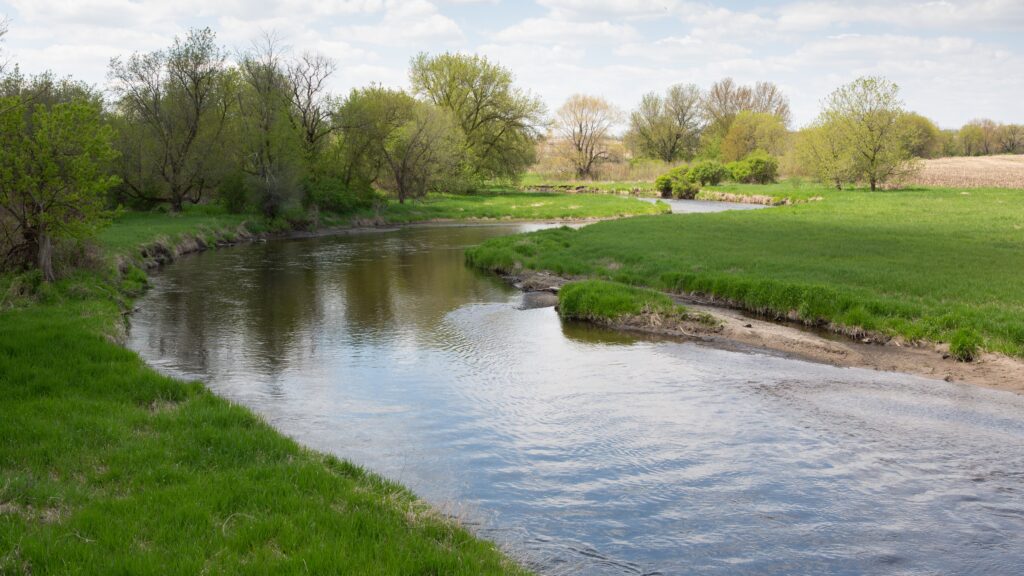
Yahara WINS worked in the Yahara River watershed, which spans 536 square miles across Dane, Columbia and Rock counties.
“When we launched Yahara WINS, we believed that investing in watershed health could deliver real, measurable outcomes—not just for water quality, but for our community and environment. It’s incredibly rewarding to now see that work validated through the ability to calculate carbon credits by avoiding building at the treatment plant and choosing to work in the watershed,” says Martye Griffin, the District’s Ecosystem Services Manager. “Carbon finance has finally reached a point where it can meaningfully reduce the cost burden on ratepayers while supporting long-term ecological benefits. This milestone shows that local action can drive notable global impact.”
By the numbers
The environmental benefits of choosing a watershed-scale approach instead of adding to the treatment plant are impressive:
- 73,463: The total carbon dioxide equivalent (CO2e) metric tons projected to be avoided over the 20-year project by not building tertiary treatment and working in the watershed to reduce phosphorus.
- 90%: Percent of GHG reductions that came from avoided electricity use through choosing Yahara WINS over built infrastructure, with the remainder from reduced chemical inputs.
- 17,124: Number of gas-powered cars taken off the road for a year by avoiding 73,463 metric tons of emissions
Why carbon credits matter for wastewater utilities

With increasing regulations and tighter permit restrictions, wastewater utilities across the nation are faced with decisions similar to the one the District made in selecting watershed adaptive management to achieve permit compliance.
The District began its partnership with Virridy in 2023 to help validate new carbon accounting methods to quantify the environmental benefits of choosing watershed adaptive management over built infrastructure. The methodology enables utilities to quantify and verify greenhouse gas (GHG) emission reductions achieved by choosing watershed-based alternatives, thereby avoiding the GHG emissions associated with building and operating conventional infrastructure. It also provides a roadmap for other utilities to achieve regulatory compliance and climate resilience at the same time.
“Carbon markets have focused on forestry and renewable energy. This shows they can work for water infrastructure decisions, giving utilities a new tool,” says Evan Thomas, CEO of Virridy.
Watershed credit first movers
Even before the verified carbon credits generated by the District were ready for issue, two organizations were ready and waiting to purchase them: Water Environment Federation (WEF) and M.A. Mortenson Companies, Inc, parent company to Mortenson.
WEF has purchased 1,000 credits and named Madison Metropolitan Sewerage District the carbon offset partner for WEFTEC 2026, the premier conference for water professionals and the largest annual water quality event in North America focused on water and wastewater treatment innovations. It attracts over 20,000 attendees and 1,000 exhibitors annually. WEF will use these credits to offset conference emissions, and conference-goers will have the option to purchase additional credits to offset their travel.
Mortenson, a Minneapolis-based builder that built the Fiserv Forum, has also purchased credits. Chief Investment Officer Mark Mortenson said that Mortenson is proud to support Yahara WINS and loves how it helps improve water quality and biodiversity in our region while avoiding climate emissions, setting a new bar for how infrastructure, environment and carbon finance can work together.
Want to learn more about our watershed work? Check out the Yahara WINS website.
