


Curbing salt use to protect our freshwater resources
In Wisconsin, we rely on salt to soften the water in our homes and to keep our roads, driveways and sidewalks safe in the winter. But all this salt use comes with a cost: excess chloride in our freshwater systems. Like most treatment plants, the District’s plant isn’t designed to remove chloride, so all the chloride that enters the sewer system ends up in waterways.
Each day, the District receives 220,000 pounds of salt. That’s equal to three semi-trailers or 5,500 40-pound bags of water softener salt daily! Through the collective actions of residents, businesses, salt professionals and others, we can help reduce the amount of salt that ends up at the treatment plant and in freshwater systems.
One teaspoon of salt can permanently pollute 5 gallons of water. Once chloride is in the water, there is no easy way to remove it.
Take action to reduce salt

residents
Learn about water softener efficiency, hard water and ways to reduce chloride use in your home.
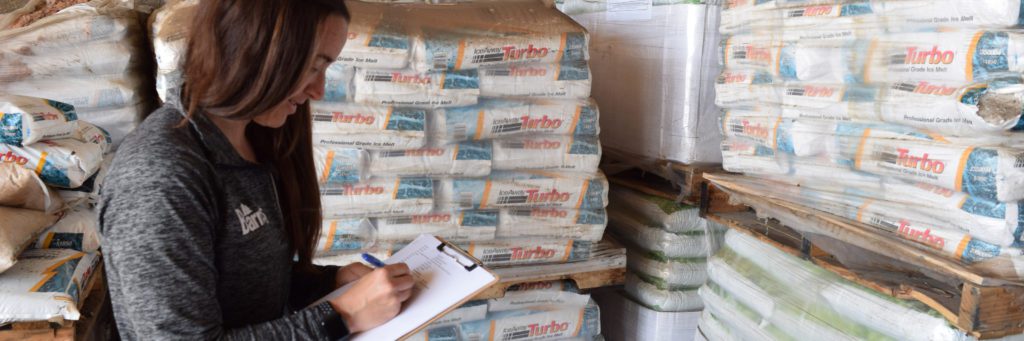
businesses
Find resources on chloride reduction and available grants for businesses and property managers.
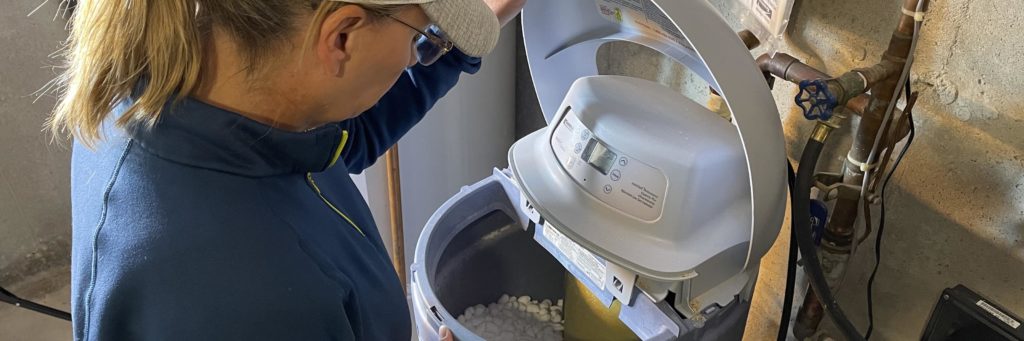
Softener Pros
Access materials geared for plumbers and water softener professionals to help your customers reduce salt use.

Road Maintenance
Get information on upcoming training and actions you can take to keep road salt out of local waters.
Learn about hard water and chloride
Get answers to your questions and find technical information on water hardness, softening systems, water softening efficiency and ways to use key tools in your home to reduce the impacts of chloride on the environment.

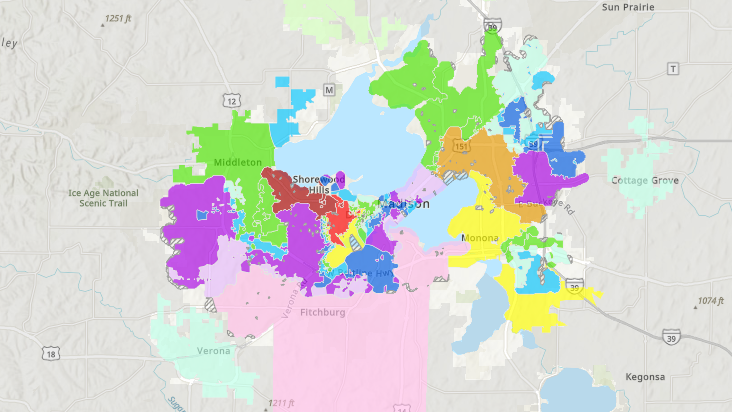


District chloride program
While it’s easy to add salt to water, removing it is costly and energy-intensive. In 2015, the District completed a chloride compliance study examining sources and potential treatment options. At that time, the study showed that adding chloride-reduction technology to the treatment plant would cost over $400 million, resulting in higher sewer bills for all users. Rather than adding costly treatment to protect our freshwater, we can more cost-effectively reduce salt use at the source.
District reports and studies on chloride
- Chloride Compliance Study
A 2015 study that provides information on chloride sources to the plant, options for compliance and the costs of compliance options.
View study - Water Softener Optimization Study
A 2015 study that investigated how water softener optimization can aid wastewater utilities in chloride discharge limits.
View study - Chloride Source Reduction Compliance Plan
A 2019 recap of the our chloride production program’s first variance term and a vision for the second variance term.
View recap - Salt Savers Pilot Program
A program to improve water softener efficiency and reduce chloride entering the sewer system in McFarland, Town of Dunn and the Pleasant Spring Sanitary District.
View pilot - Chloride Pollutant Minimization (PMP) Program Report
An annual report outlining 2024 District chloride reduction efforts.
View PMP report



FAQs on chloride
What is chloride?
Chloride is an ion (charged particle) that is most commonly found in sodium chloride, also known as table salt or rock salt. When salt dissolves in water, it separates into sodium ions and chloride ions. Chloride can also be found in other compounds, like magnesium chloride and potassium chloride.
Why is chloride a concern?
High concentrations of chloride are harmful to freshwater plants and animals. It takes only one teaspoon of salt to bring five gallons of freshwater to the chloride level that starts to affect freshwater life, according to the U.S. Environmental Protection Agency. Chloride can also interfere with healthy ecosystem processes and kill vegetation, which is why you might see dead grass next to sidewalks where road salt was applied in the winter.
Where does chloride come from?
Most chloride that ends up in the District’s sewer system comes from water softeners used in residential, commercial and industrial buildings. Some industries also use salt water in their processes and discharge chloride to the sewer. The sanitary sewer also receives chloride from road salt, but most road salt ends up in lakes, streams and drinking water. Small amounts of chloride come from soaps, detergents, other cleaning products and food waste.
How does chloride get into the environment?
Chloride from water softeners and other household and industrial sources is flushed into the sewer and then travels to the wastewater treatment plant. Treatment plants are designed to remove solid particles, like grit and sand, and to biologically degrade organic waste, such as food and human waste. Once chloride is dissolved in water, it cannot be removed by standard treatment processes. Chloride that comes to the Nine Springs Treatment Plant passes through the plant to Badfish Creek, and eventually to the Rock and Mississippi rivers. About 100 tons of salt pass through the plant to the environment each day. This is equal to the amount of road salt loaded into 20 five-ton salt trucks. For information about the impact of road salt on the environment, visit the Wisconsin Salt Wise website.
