

Around Madison, using the acronym “MMSD” can lead to some confusion. Are you talking about the Madison Metropolitan School District or the Madison Metropolitan Sewerage District? This time, the answer is both! The two MMSDs are partnering to reduce salt use across school facilities while helping protect local waterways.
The Madison Metropolitan School District is Wisconsin’s second-largest school district, serving approximately 25,000 students across 52 schools. As part of its commitment to sustainability and environmental stewardship, the school district is continually looking for ways to reduce its environmental footprint.
This year, that includes tackling an issue that affects communities throughout Wisconsin: salt pollution. Excessive salt use contributes to rising chloride levels in local lakes, streams, groundwater and even some drinking water sources. Once salt dissolves in water, it’s very costly and energy-intensive to remove it. Chloride, a component of salt, can also create challenges for wastewater treatment plants working to meet water quality requirements. That’s why the sewerage district works throughout the community to reduce the two major sources of salt pollution: winter road salt and water softeners.
To address this challenge, Madison Metropolitan School District Sustainability Manager Bryanna Krekeler is leading two projects aimed at reducing salt use this winter and for decades to come.

Smarter winter maintenance through brine
The first project will pilot the use of liquid brine at selected school district properties.
Using brine is a proven winter maintenance strategy. Applying salt brine directly to pavements before a storm prevents snow and ice from bonding to pavement. Because crews can apply brine more precisely and proactively than traditional rock salt, it can dramatically reduce the amount of salt needed to maintain safe conditions. Some local organizations have reported reducing salt use by as much as 70% while also saving money on materials and labor.
The new brine application system will support winter maintenance at MMSD’s high schools, Doyle Administration Building, Holtzman Road facilities and other large paved areas managed by the district. By shifting from traditional granular salt applications to liquid brine pretreatment, the school district expects to improve winter maintenance efficiency while significantly reducing chloride use and its environmental impacts.
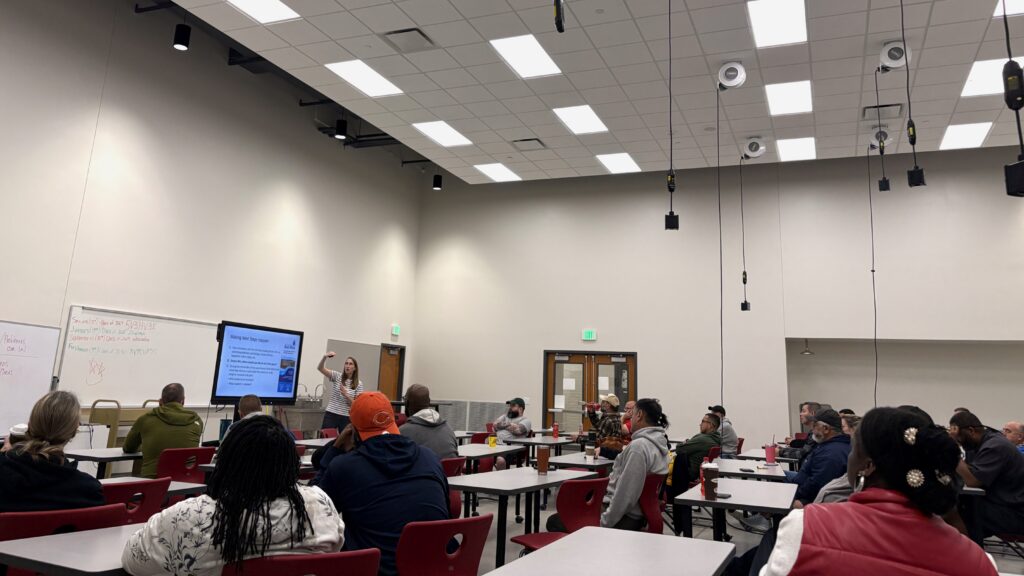
To support implementation, the school district will partner with Wisconsin Salt Wise to provide training for facilities managers, grounds crews and custodial staff. The school district recognizes that successful change requires more than new equipment.
Communication will be an important part of the project. Staff plan to engage school communities at pilot locations before, during and after the winter season to explain the changes, gather feedback and build understanding of why reducing salt use matters.
This combination of operational improvements, staff training and community engagement makes the project especially innovative. In addition to reducing salt use on school district properties, it will help raise awareness about chloride pollution and salt-smart winter maintenance practices among staff, students, families and the broader community.
With schools serving as community hubs and welcoming thousands of visitors each day, the potential impact extends well beyond the school grounds.
Designing facilities that use less salt
The second project takes an even more upstream approach.
Rather than focusing on winter maintenance practices alone, the project will examine how school sites are designed in the first place and how those design decisions influence salt use over decades of operation. Working with Bolton & Menk, a firm with expertise in cold-climate infrastructure and winter design, the school district will review 10 schools that are being built or undergoing major renovations to identify design features that can reduce the need for salt while maintaining safety and accessibility. This project is one of the first of its kind in the state.
The “Low Salt Design” review will evaluate factors such as drainage, site grading, snow storage locations, landscaping and building orientation. While these considerations are often overlooked during design, they can have a major impact on winter maintenance.
For example, poor drainage can allow meltwater to refreeze on sidewalks and parking lots. Snow stored in the wrong place can create recurring icing issues. Building entrances exposed to prevailing winds may collect drifting snow, requiring maintenance throughout the winter.
Thoughtful design can help prevent those problems before they occur.
As hard as maintenance crews work, there is only so much they can do if a site unintentionally creates icy conditions. Most salt reduction efforts focus on changing maintenance practices at existing facilities. This project goes a step further by examining how facilities can be designed to need less salt from the very beginning.
The school district plans to continue evaluating these sites after construction to better understand how design decisions influence long-term maintenance needs and salt use.
Looking beyond winter maintenance
Reducing salt use isn’t limited to snow and ice control.
The school district is also working to minimize water softener salt use through “hot-water-only” water softening systems. Rather than softening all water entering a building, these systems soften only the water that requires it.
This approach will significantly reduce salt use while also lowering equipment and operational costs over the life of the building.
Like the low-salt design review project, it demonstrates that many chloride reduction opportunities exist long before maintenance staff open a bag of salt.
Chloride reduction innovation grants
These projects are supported through the sewerage district’s Chloride Reduction Innovation Grant Program, which helps organizations test new approaches to create lasting reductions in the amount of salt entering the wastewater system. The goal is not only to improve water quality today, but also to encourage new practices and ideas that others can adopt or replicate throughout the community.
A major purpose of the sewerage district’s Innovation Grant Program is to encourage new thinking and create real-world examples that others can learn from.
The school district’s projects include operational improvements, infrastructure planning, staff training and public education in ways that can serve as models for other school districts, municipalities, businesses, universities and large property owners.
By working together, Madison Metropolitan School District and Madison Metropolitan Sewerage District are demonstrating how collaboration can lead to practical solutions that protect water quality today while helping shape more sustainable practices for the future.
