


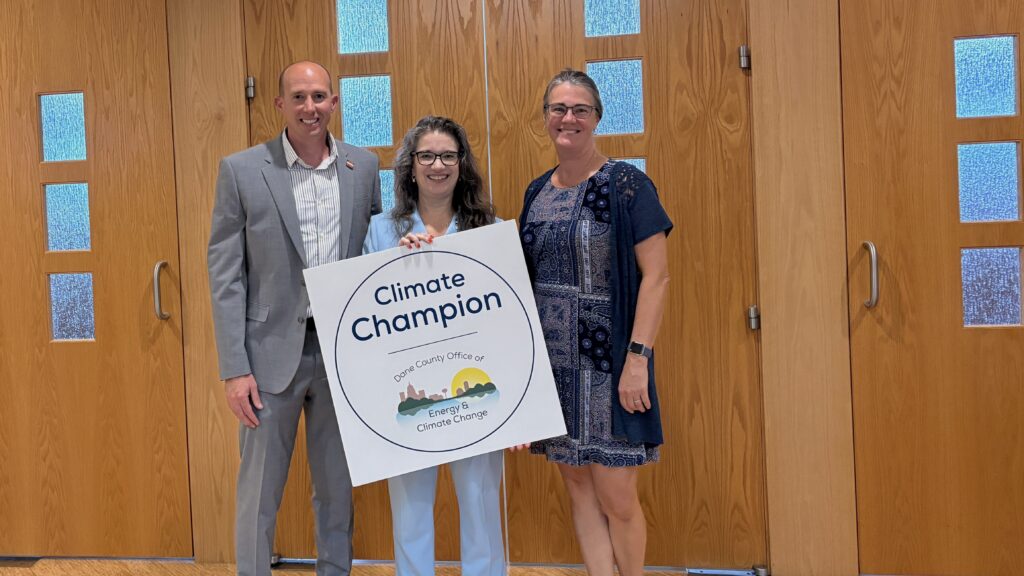
Dane County has recognized the District as one of 73 local entities to earn 2026 Climate Champions status in not one but three categories with four awards, including:
- Catalyst Category: Champion
- Water Use Category: 3 Star Champion
- Renewable Use Category: 4 Star Champion – Maintenance Facility
- Renewable Use Category: 3 Star Champion – Nine Springs Wastewater Treatment Plant
The Climate Champions program, run by the Dane County Office of Energy and Climate Change, celebrates local entities leading the way in climate action. In her address to Climate Champions who gathered at Holy Wisdom Monastery on Thursday, County Executive Melissa Agard noted, “We know by taking bold action, we can save money, create jobs, protect the environment today and into the future, and improve health and well-being.”
CATALYST AWARD: RETHINKING CHLORIDE REDUCTION

Wisconsin’s freshwater lakes and streams are increasingly threatened by rising salt levels from sources like road salt and water softeners. Rather than building a costly and energy‑intensive treatment system — estimated at more than $400 million — the District is taking a proactive approach to reduce salt pollution at its source. This pollution‑prevention strategy not only saves money by avoiding major plant upgrades but also delivers far greater environmental benefits by reducing salt at the source, helping protect drinking water, rivers, and lakes.
This collaborative effort brings together municipalities, businesses, residents, environmental groups, and more to rethink how salt is used across the region. The program has already prevented more than 600,000 pounds of chloride (and counting) from entering wastewater and has helped communities cut back on road salt, safeguarding freshwater and reducing energy demand. Beyond meeting regulatory requirements, our leadership in growing the network of individuals and organizations involved in salt reduction has had ripple effects beyond our community. Work to reduce salt here in the Madison area has inspired others throughout the state and nation, showing how innovation, education, and community engagement can reshape behaviors and protect one of our most valuable natural resources.
RENEWABLE ENERGY: DOUBLE THE RECOGNITION
Our renewable energy work earned us two Climate Champion recognitions. Our Maintenance Facilities building, which runs largely on renewable power, earned four stars, while the Nine Springs Wastewater Treatment Plant as a whole earned three stars.
At our Maintenance Facility building, which is LEED Platinum-certified, a rooftop solar array installed by Pieper Electric supplies 83% of the building’s electricity needs. Additionally, the building is fully heated using waste heat from onsite engines and heat from biogas-fueled boilers from the wastewater biosolids digestion process, requiring no purchased natural gas for the facility.
Take a virtual tour of the LEED Platinum Maintenance Facility at the Nine Springs Wastewater Treatment Plant.
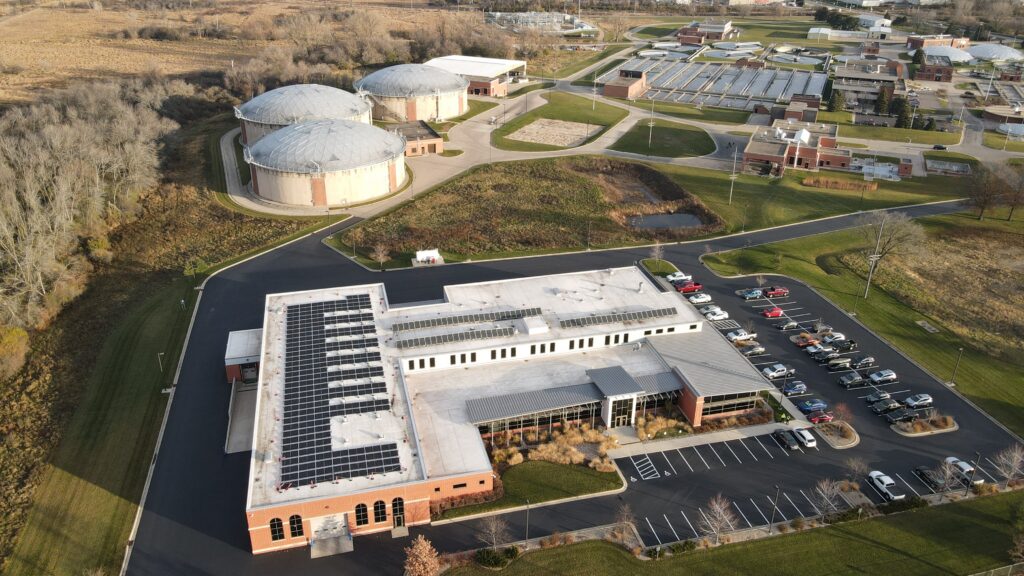
For the treatment plant as a whole, 83% of its heating demand is met by biogas in boilers and cogeneration engines. Additionally, about 23% of electricity is generated by renewable energy systems. The District has also partnered with MGE to build on the Nine Springs Solar Project in order to contribute to renewable energy production and be a more sustainable community partner.
3-STAR WATER CONSERVATION
Our fourth recognition is for the Water category, for efforts across multiple areas in the communities we serve. These efforts include our incentive programs promoting reducing winter salt use and accelerating the transition to high-efficiency water softeners across the Dane County service area. Additionally, we host a safe-water medicine take-back program and share public signage about what should and should not be flushed to protect our communities and shared water resources.
These efforts reflect our commitment to sustainability, which is one of the District’s core values.
ACTIONS THAT MAKE SENSE
From protecting public health and the environment to managing community resources responsibly and cost-effectively, the District has a long-standing commitment to sustainability. It is ingrained in every aspect of collecting wastewater, treating it, and returning clean water to the environment. As Executive Director Eric Dundee put it, “This isn’t just about keeping systems running. We are always striving to achieve operational excellence and build infrastructure that our communities can rely on for generations. Sustainability and reliability go hand in hand.”
Being named a four-time Climate Champion in three separate categories is a meaningful milestone and reflects years of work focused on protecting our waterways, advancing resource recovery, reducing energy use, and demonstrating fiscal responsibility. We’re grateful for the recognition and fortunate to have communities that share this commitment.
