


Reducing salt use at home
All the salt used around your home, whether in your water softener or on your driveway or sidewalks, ends up in local waterways. Since our treatment plant isn’t designed to remove dissolved salt from water, there is no easy way to remove it once it is in the water. You can help protect our lakes, streams and drinking water by using only as much salt as is necessary for residents to soften water and keep surfaces ice-free. Here are some options for area residents to help reduce chloride pollution.


Improve your water softener efficiency
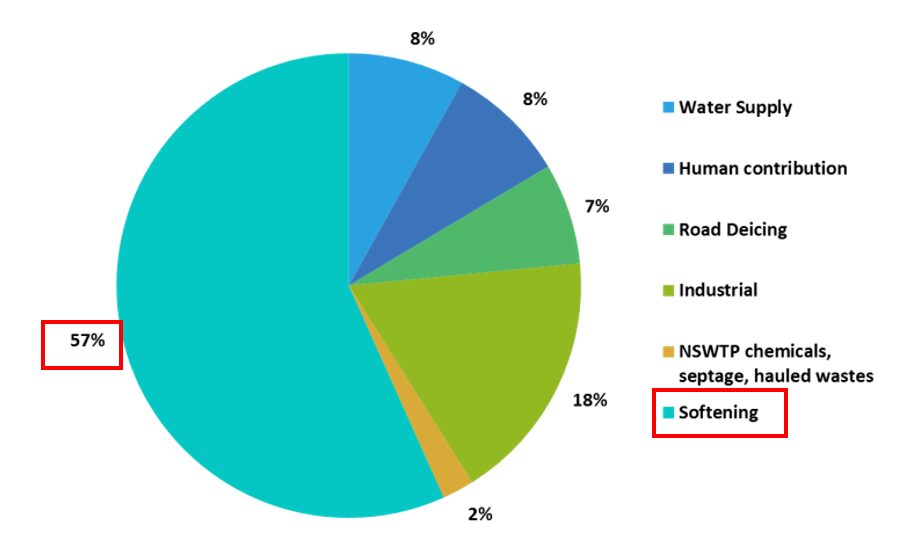
Water softeners are a significant source of chloride, making up about 57% of salt contributions to the treatment plant. While other municipal activities and industrial sources contribute, reducing salt use in water softeners is the area where we all can help make the biggest impact. The less water we soften, the less salt we use.
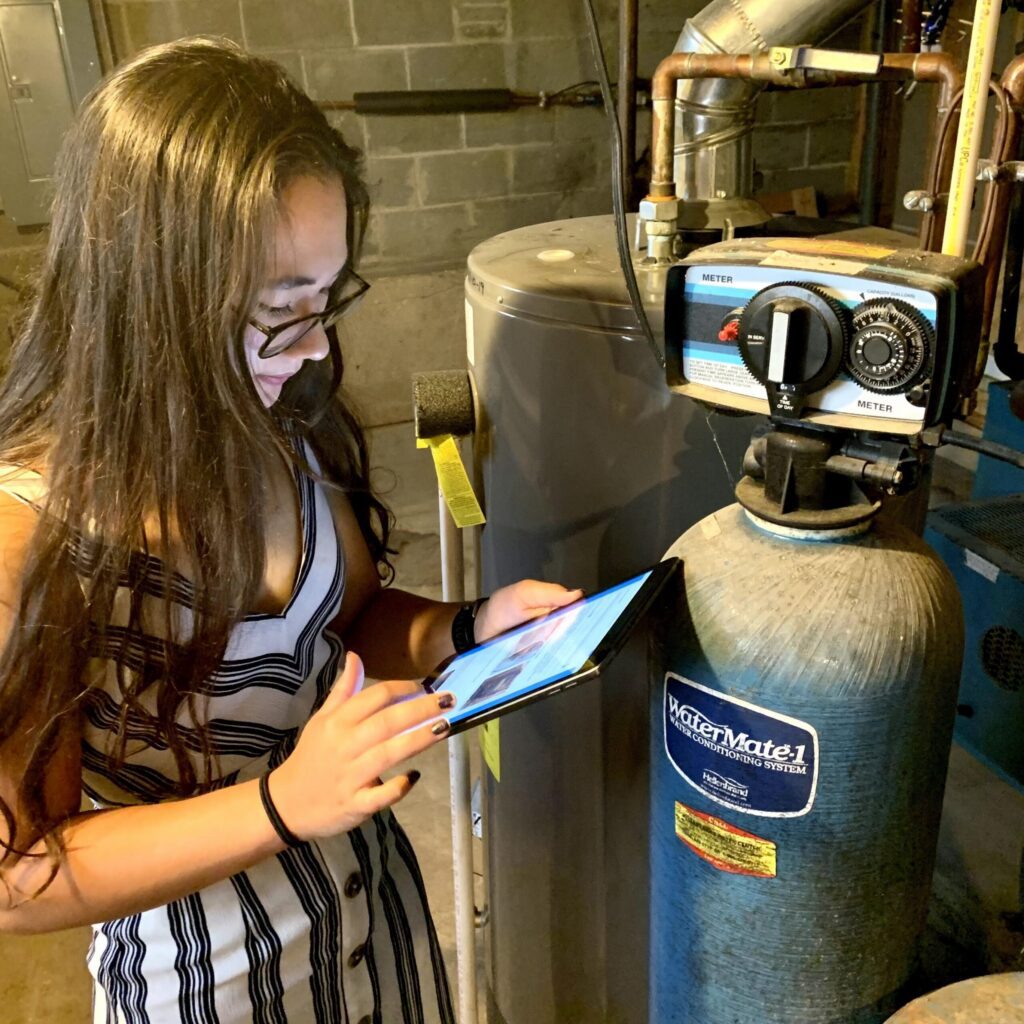
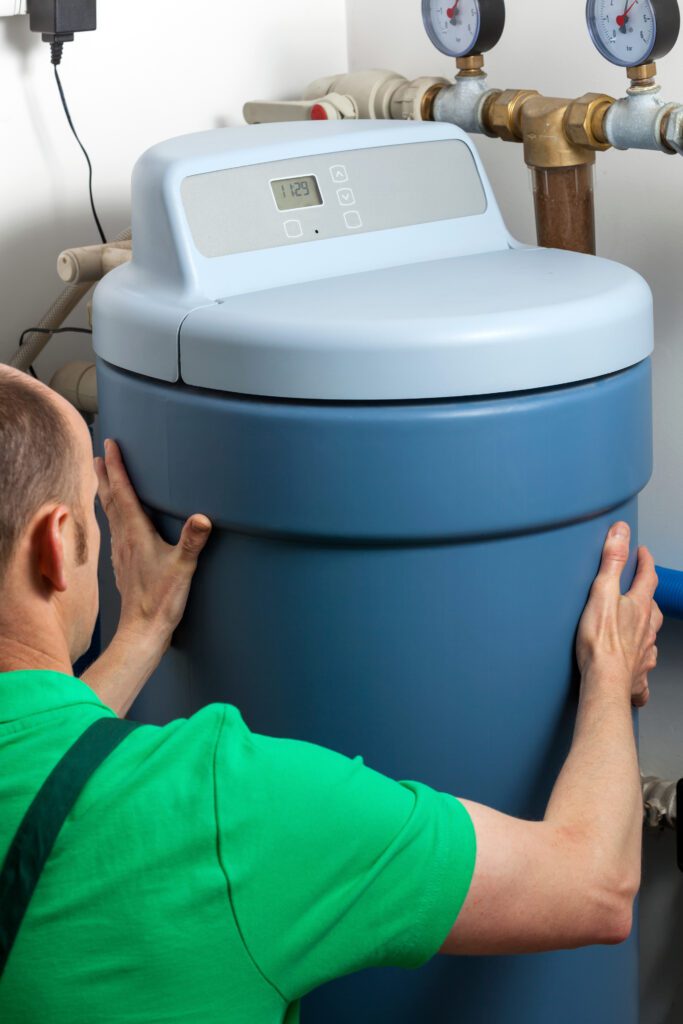
Water softeners use salt to remove minerals from hard water that can build up on fixtures and appliances. All the salt that goes into a water softener ends up down the drain, and inefficient or improperly configured water softeners use higher amounts of salt. One of the most effective ways to reduce salt at home is to ensure that your water softener is operating efficiently.
- Use our online self-screen tool to evaluate your water softener to determine if it should be optimized or replaced.
- Track how much salt your water softener uses. A typical single-family home uses less than one 40-pound bag of softener salt per month. If you’re using more than that, call a softener service provider to assess your softener for repairs or improvements.
- Check for leaks in fixtures that use soft water. Whenever soft water is wasted, salt is also wasted.
- The average lifespan of a water softener is about 15 years. If your water softener is due for replacement, provide your water softener vendor with these best practices for softening efficiency.
Find your home’s water hardness
Water in the Madison area has dissolved minerals, which make it “hard.” Hardness levels can vary by community, which can impact water softener setup. To reduce chloride pollution, Ask a plumber or softener professional to set up your water softener at its lowest salt setting and at a hardness setting that matches the water hardness at your address.
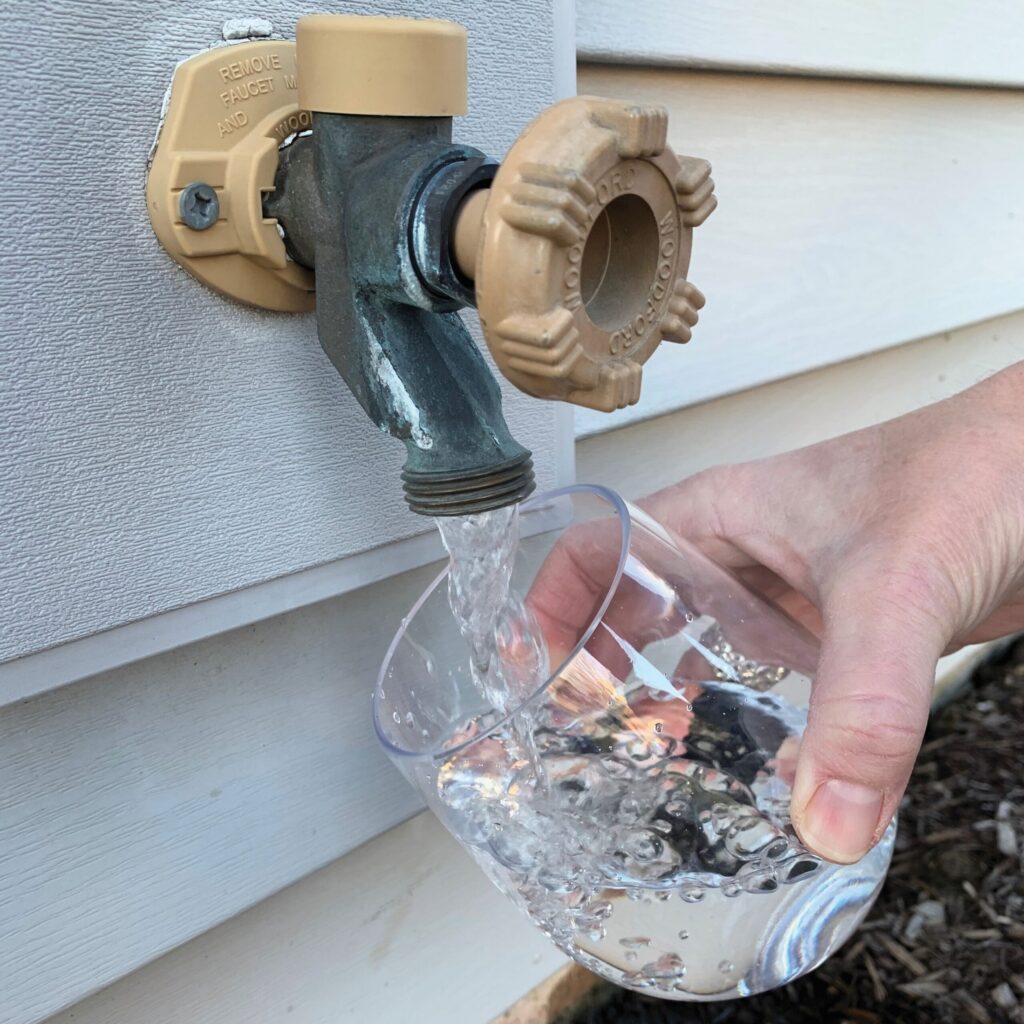
You can also determine whether any water sources in your home use soft water when they could be using hard water instead. Because hardness buildup, or scale, forms more readily in hot water, consider removing cold water sources from your water softener so you’re softening only hot water, which will cut your salt use. Request water hardness test strips to determine whether fixtures, such as toilets or outdoor spigots, are unnecessarily connected to the softener. You can also test for hard water using certain types of soap, as depicted in this video.
Get a softener blending valve
A blending valve, sometimes called a mixing valve, is a simple, inexpensive device for your softener that provides partially softened water to your home plumbing. Blending valves reduce salt use while still protecting appliances and fixtures. Learn more about blending valves for softening water using less salt.
You can also consider a salt-free water conditioning device, which is designed to reduce mineral buildup on appliances and fixtures. Because they are not the same as water softeners, they have different effects on the treated water. The District supports the installation of salt-free devices approved for use by the State of Wisconsin.

Use less winter salt at home
While salt is part of the winter maintenance toolbox, it’s not the only tool!
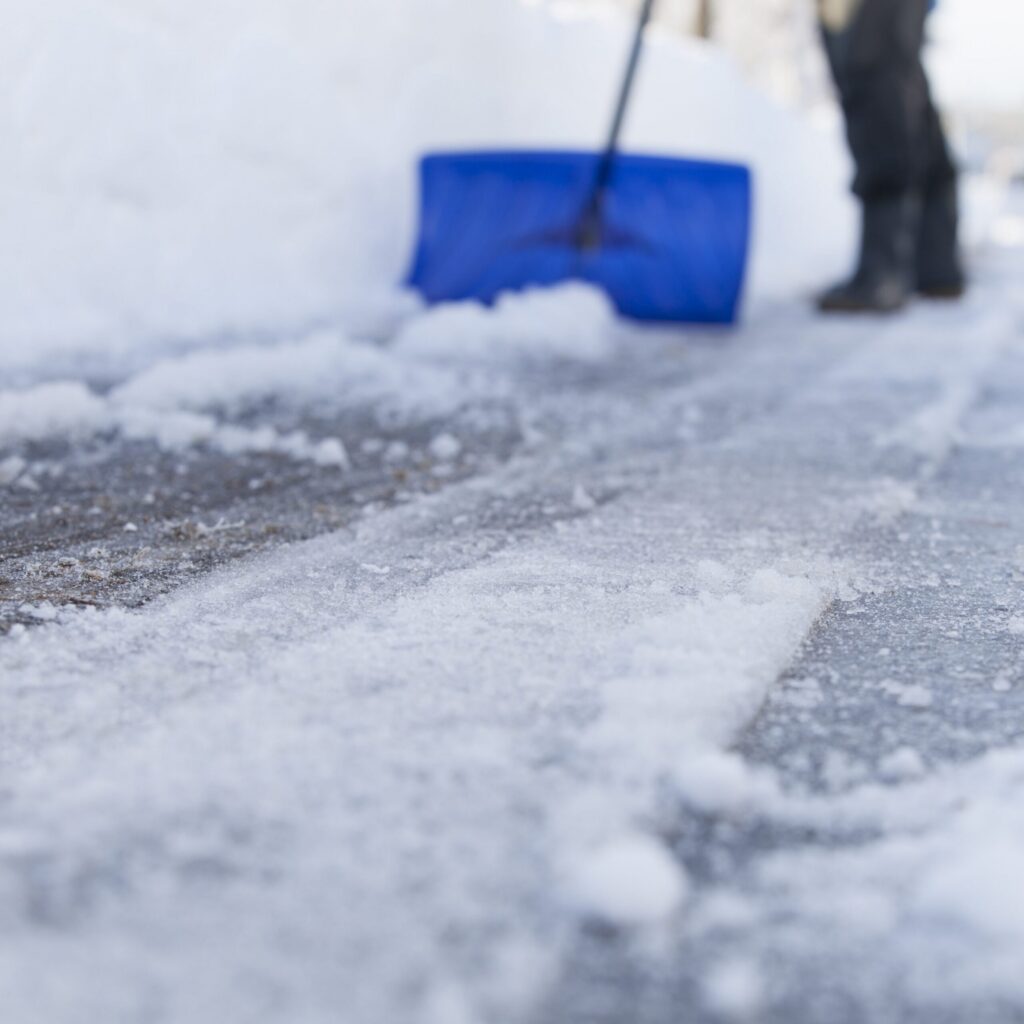
- Shovel and sweep to clear sidewalks and walkways before snow turns to ice.
- Scatter salt so there is space between the grains. A little salt goes a long way, and a 12-ounce mug or cup of salt is enough for 10 sidewalk squares after the snow has been shoveled off.
- Switch to sand or alternate ice melting agents when pavement temperatures are 15 degrees or lower.
- Can’t I just use sand instead of salt on my sidewalk or driveway? Unlike salt, sand does not melt ice and isn’t a direct substitute for salt. Sand’s function in winter is to provide traction on top of slippery surfaces. Because road salt doesn’t work well below 15 degrees Fahrenheit, sand can be used when it’s very cold to help reduce the risk of slipping. It’s also important to remember that salt alternatives like sand and beet juice also have environmental impacts, so no matter what substance is used on surfaces in the winter, it’s important to use the right amount.
The District is a founding member of the Wisconsin Salt Wise partnership, a collaboration among several local and state agencies working to protect freshwater from salt pollution. Visit the WI Salt Wise website to learn about other actions you can take to reduce your salt use at home.
Reduce hard water impacts in your home
Living with hard water and scale is manageable once you have the right tips and tricks for everyday tasks. Our #HardWaterHacks series offers videos and blogs to demonstrate creative solutions to embrace our area’s naturally mineral-rich water.
