


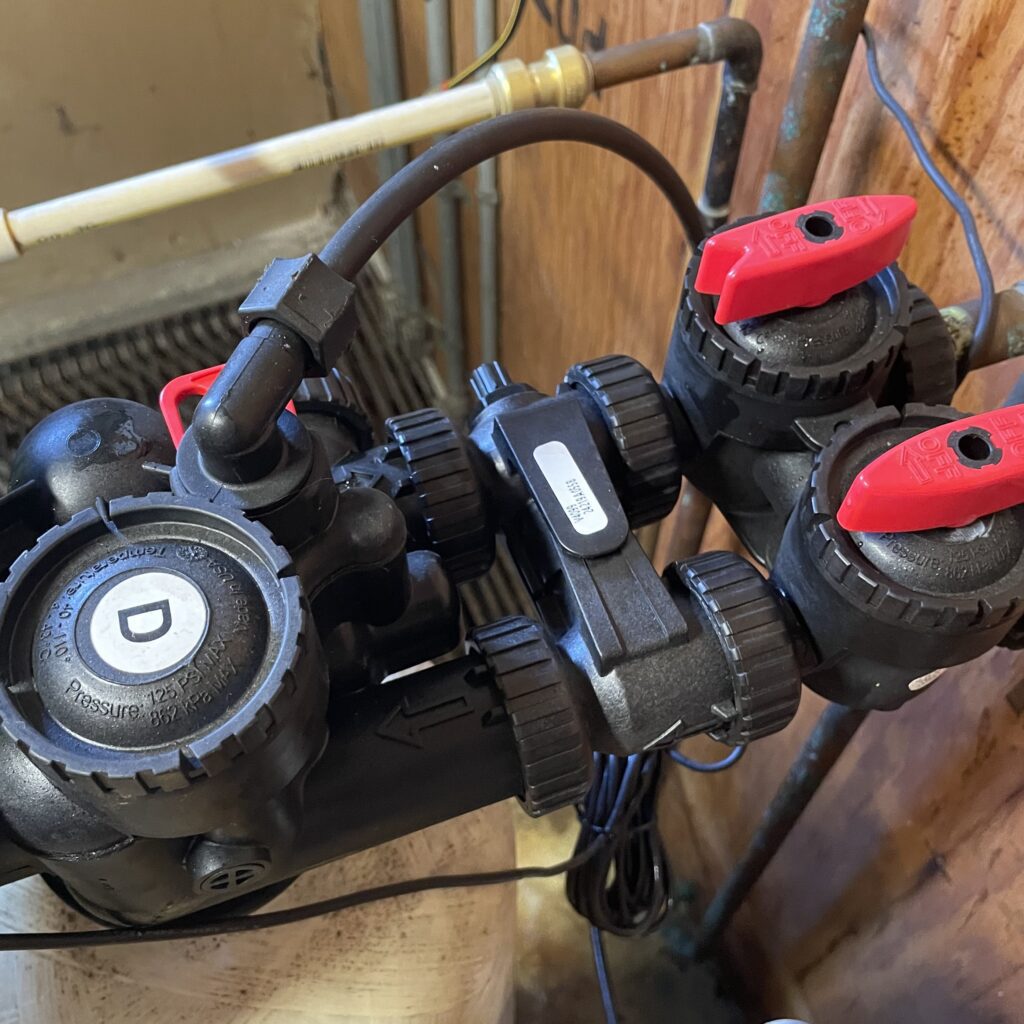
Water softener blending valves are good tools to reduce home salt use and protect fresh water. They work by diverting some hard water coming into your home and blending it with softened water, producing water that is mostly softened but still contains a low level of hardness. As a result, your softener uses less salt, and you still protect your home water systems from the impacts of very hard water. Blending valves also allow you to tailor water hardness to your preferred level, a plus if you aren’t a fan of the slippery feeling of completely soft water.
Historically, blending valves haven’t been widely used in our area, but they’re beginning to take off. Tim O’Brien Homes is including them as a standard feature in new homes. Also, in a District-led pilot project in Middleton in 2025, most residents who installed a blending valve on their existing softener were happy with their water quality after installation.
To get a blending valve for your water softener, determine if your softener is a good fit, choose a blending valve installer and request a blending valve.
Determine if your softener is a good fit
The easiest time to get a blending valve is when you’re buying a new softener. Many softener brands in our area, including Capital, Hellenbrand and Culligan, have models that are compatible with blending valves. All you need to do is request a blending valve when buying the new softener.
If you’re adding a blending valve to your existing softener, check whether a blending valve is compatible with your softener model. The softener brand and models in the table below are known to have a compatible blending valve. If your softener isn’t listed below, you can contact your softener manufacturer to see if there’s a valve that will work with your model.
| Brand | Models | Compatible valve |
|---|---|---|
| Addie | CM1, CM125 | Clack external in-line mixing valve |
| Capital | Windsor Series (WS), Bella Series | Clack external in-line mixing valve |
| Culligan | High-efficiency (HE) water softeners | Built-in |
| Fox | DC Series | Clack external in-line mixing valve |
| GE | GXSH40V, GXSH45V, GXGXSHC40N (Smart softener) | Built-in |
| Hellenbrand | E Series, ProMate, H100, H125 | Clack external in-line mixing valve |
| Proficient H2O | Pro100, Pro300 | Clack external in-line mixing valve |
| Rheem | RHS42, RHW42 | Built-in |
If your softener is old (15+ years) or not working properly, it’s a better idea to replace your softener rather than add a blending valve to it.
Choose a blending valve installer
Several plumbing and water softener companies in our area can install a blending valve. These companies have confirmed that they offer blending valves, but if your preferred plumber isn’t on this list, you can still ask if they can install a valve.
- HJ Pertzborn
- Hooper
- KJM Plumbing
- Monona Plumbing
- Sheldon Plumbing
- Swinehart Plumbing
- WF Butler Plumbing
Request a blending valve
When you contact an installer, let them know the brand and model of your softener so they can confirm that they can provide a blending valve. Also, let them know the hardness blend you’d like the blending valve to produce. You can use our salt reduction calculator to help choose your blend.
If you’re not sure, start with a hardness blend of 20% hard, 80% soft water. Depending on the source water hardness of the water to your home, this blend translates to a hardness level of 3-6 grains per gallon in your water. (For reference, source water hardness in Milwaukee is around 8 grains per gallon, and most residents there don’t soften their water). The higher the percentage of hard water, the more salt you save.
Blending valves are adjustable, so you can always have the valve adjusted to a lower or higher hardness to suit your preference. Find the blend that’s right for you!
Written by pollution prevention specialist Emily Jones
