

Understanding hard water and the role of water softening
Water hardness refers to the amount of calcium and magnesium compounds dissolved in water. These minerals naturally occur in groundwater and are not harmful to human health. In the Madison area, our drinking water source is groundwater that’s high in minerals, creating hard water. Water softeners that use softener salt are the most common treatment for hard water in our area, but there are ways to minimize salt use and reduce chloride pollution.



Impacts of hard water
Hard water can cause buildup, called scale, on fixtures and appliances which can reduce water flow and appliance efficiency. Scale forms more easily in hot water than in cold water, and is particularly observed in water heaters and appliances that use hot water.
The hardness level of water is classified based on the concentration of total calcium carbonate (CaCO3). This concentration can be expressed as milligrams per liter (mg/L) or grains per gallon (gpg), which is the unit commonly used when talking about water softeners. According to the USGS, the levels of water hardness correspond with the following CaCO3 concentrations:
- Soft: 0-60 mg/L or 0-3.5 gpg
- Moderately hard: 61-120 mg/L or 3.5-7 gpg
- Hard: 121-180 mg/L or 7-10.5 gpg
- Very hard: more than 180 mg/L or more than 10.5 gpg
Generally, the higher the hardness, the greater the potential for noticeable hard water impacts. In the Madison area, drinking water ranges from 15 to 32 gpg, depending on the source well, and is classified as “very hard.”
Softener salt
Softening or conditioning water can help reduce or prevent scale buildup and other hard water impacts.
- Water softening is the process of removing hardness particles from a building’s source water using salt compounds so the water used in the building is soft (containing very little to no hardness).
- Water conditioning is the process of changing the nature of hardness particles in the water to reduce their tendency to form buildup. Conditioned water still contains hardness and may leave behind buildup, but this buildup isn’t as stubborn as scale from unconditioned hard water so it can be cleaned more easily. The District doesn’t have much information about how well salt-free water conditioners work in our area.
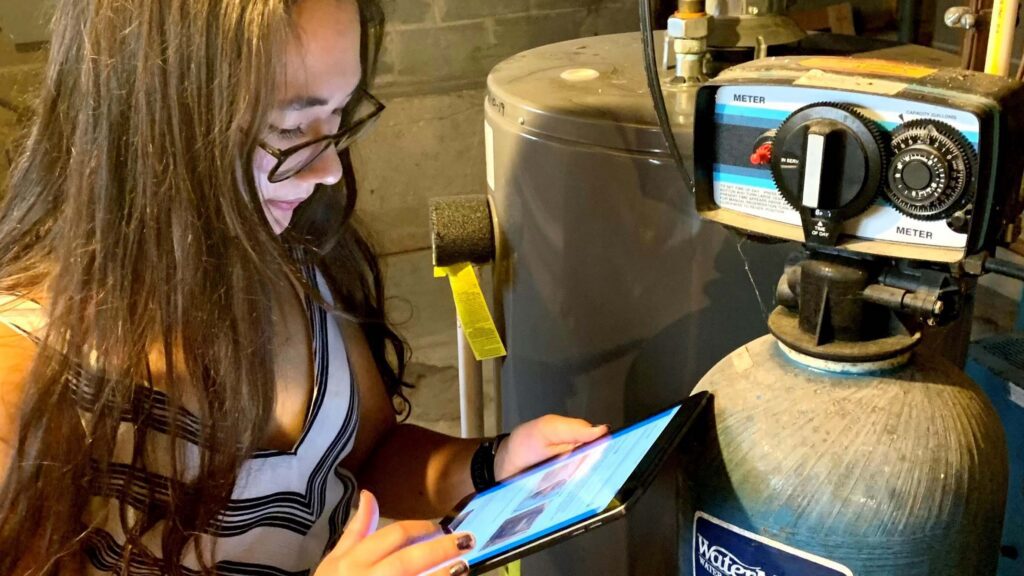
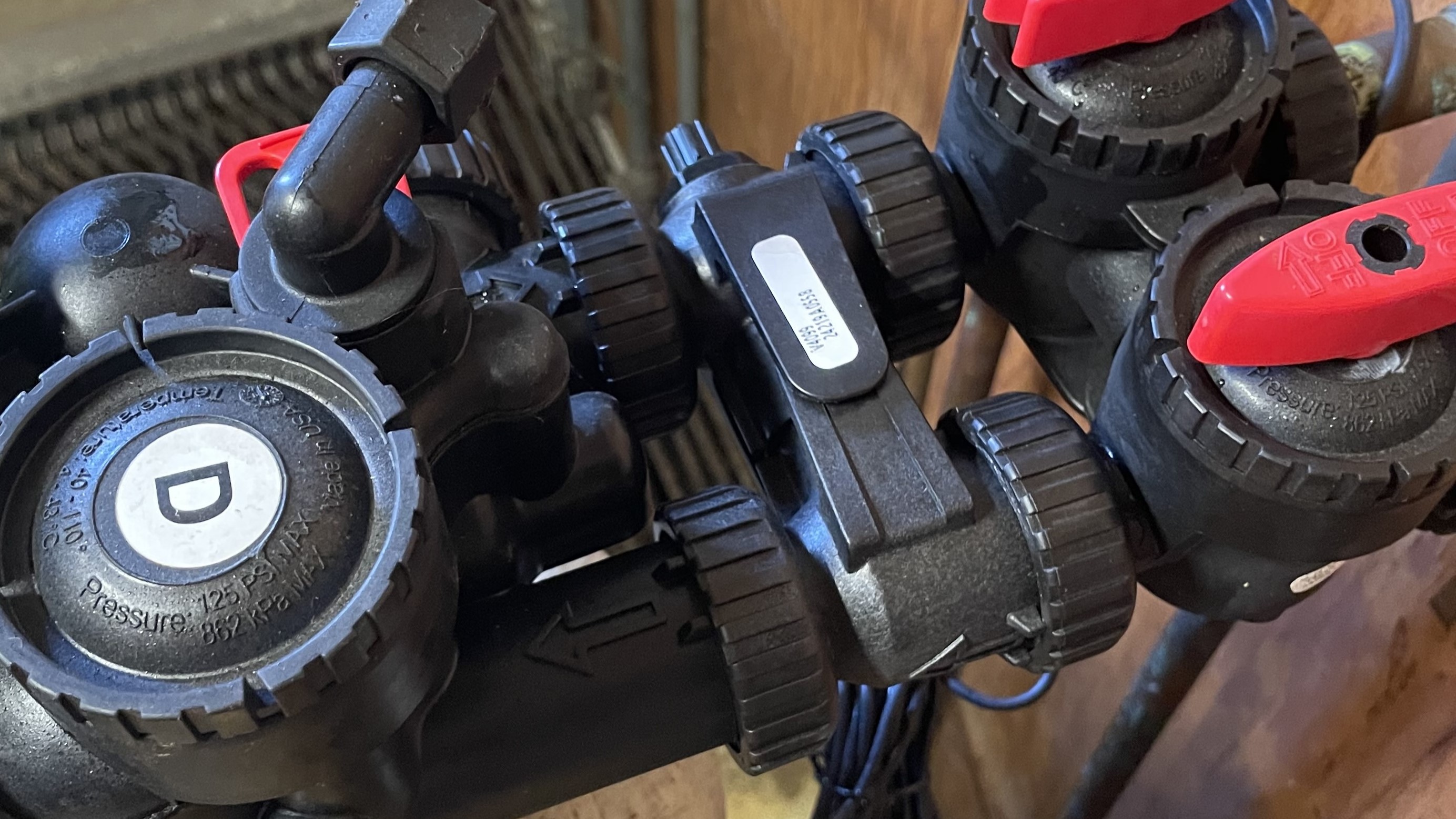
Water softening appliances, or water softeners, are installed where hard source water enters a building. Depending on how the building is plumbed, the water softener may treat only the water heading to the water heater (hot-only softening) or treat both cold and hot water. Softeners remove calcium and magnesium particles by replacing them with sodium, which is supplied by the salt in the brine tank. After softening, hardness particles are left behind in the softener, while the sodium flows in the softened water to the building.
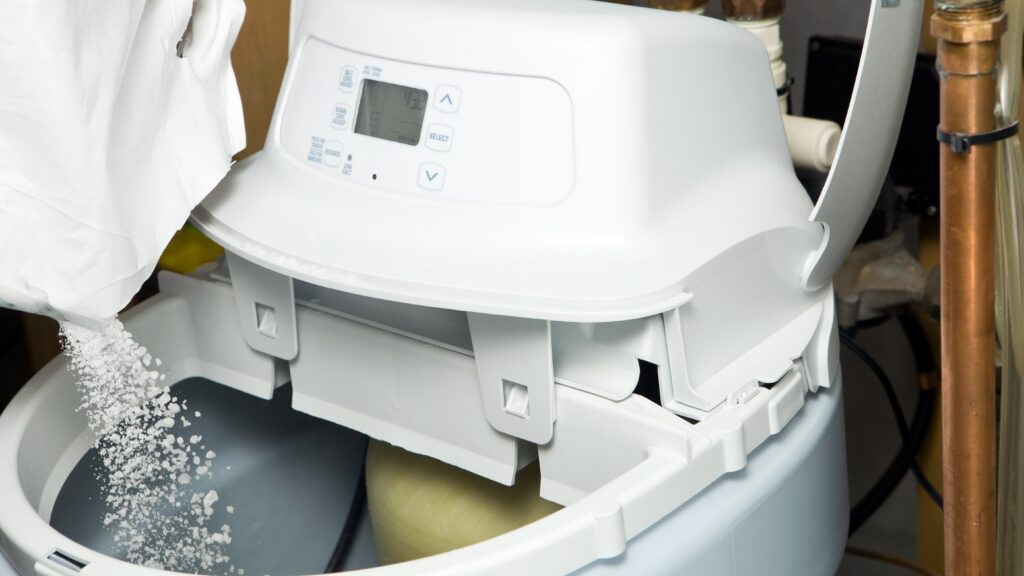
Without the sodium from salt (sodium chloride or NaCl), softeners can’t remove hardness. When the available sodium in the softener tank is almost used up, the softener needs to regenerate to continue providing softened water. Regeneration is the process of flushing out the hardness particles from a softener and replenishing the sodium ions in the softening tank. During regeneration, the softener creates a brine solution from the salt in the brine tank and draws the solution into the softening tank, flushing out the hardness particles and leaving a fresh supply of sodium to restart the softening process.
The water rinsed out of the softener during regeneration contains the removed hardness particles and chloride from the salt brine. This rinsewater goes down the drain into the sewer system and heads to the Nine Springs Wastewater Treatment Plant, which (like many treatment facilities) is not designed to remove chloride dissolved in water. Every bag of salt used by a water softener travels through the treatment process and flows into a local freshwater stream.
Pros and Cons of Softeners
Softening water has advantages and disadvantages. There is no requirement to have a softener in a home; it’s up to the individual homeowner to decide whether they want to soften their water, and if so, how much they want to soften.
Advantages of softening
- Prevents scale buildup in water heaters and other appliances, which can save energy and prolong their lifespans
- Helps soap and detergent work more effectively
- Prevents mineral residue on dishes and clothing
Disadvantages of softening
- Contributes chloride to the environment that threatens freshwater
- Requires replenishing the softener with heavy salt bags
- Leaves water feeling “slippery,” which some people don’t prefer
- May lead to steep increases in sewer bills if wastewater treatment plants need to install technology to remove chloride
So, water softeners can have energy-saving and aesthetic benefits in homes, but they can pollute water and put communities in the position of having to add expensive, energy-intensive chloride treatment technology. We recommend that residents and businesses use the lowest amount of salt possible to soften water. Salt reduction can be achieved by increasing the efficiency of your water softener or softening less water.
Water hardness Recommendations
There’s not a one-size-fits-all level of water hardness that works for every situation. One person might want softer water, while another person might tolerate or even prefer some hardness in their water. There are also some water systems that are more sensitive to hard water, such as industrial heating and cooling systems or some medical equipment. For residential water uses, plumbing systems and appliances will function properly with water that is slightly to moderately hard. You can use a blending valve with your water softener to adjust the hardness of your home’s water to your preference.
Considerations for determining the right level of water hardness:
- A low level of hardness (3-4 gpg) can protect your water heater by forming a thin level of insulating scale on the heating element, reducing the potential for corrosion.
- A moderate hardness level of 3.5-7 gpg is considered ideal by the U.S. Department of Energy.
- Lake Michigan has a natural hardness of about 7.5-8 gpg. While this is borderline hard water, many residences in Milwaukee and other communities that get their water from Lake Michigan do not have water softeners.
- Water over a certain level of hardness may void the warranty for your water heater or other appliances. Check your appliances’ warranties to see if there is a maximum allowable water hardness to keep these products under warranty.
- The less water you soften, the less softener salt you use. If you use a blending valve or soften only the hot water in your house, you’ll save on salt and help protect freshwater from chloride pollution.
FAQs on hard water
What makes hard water hard?
Rainwater that falls is “soft,” meaning it does not contain any minerals. As it percolates through the soil and rock toward aquifers and wells, rainwater dissolves any minerals present, which can include calcium and magnesium. Water with substantial amounts of calcium and magnesium is referred to as “hard water.”
How do you measure hardness?
Hardness is measured in terms of grains per gallon (g/gal) or milligrams per liter (mg/L). If you were to evaporate one gallon of water with a hardness of 5 g/gal, the residue would be equal to one 5-grain aspirin tablet. Laboratories often record hardness as mg/L or parts per million (ppm). One g/gal of hardness is equal to 17.1 mg/L of hardness. In the example above, 5 g/gal equals 85.5 mg/L hardness. Water that is 10 g/gal or more is considered very hard.
Why is my water hard?
Most drinking water in Dane County comes from groundwater held in an aquifer far below the surface. The wells that supply water for the Madison Water Utility range from 744 feet deep to 1,175 feet deep. Dolomite is composed of calcium magnesium carbonate and is the source of the minerals that make our water hard. The hardness of water from the Madison Water Utility is typically 16 to 24 g/gal.
You can look up the average water hardness for your address on our water hardness map.
What is the problem with hard water?
The minerals in hard water can be deposited as scale on pipes and in hot water heaters. Hardness deposits, or scale, can make water heaters less efficient by creating a barrier between the heating element and the water. Depending on the type of water heater, scale buildup can decrease its lifespan or increase its energy use because it has to work harder to heat water.
Hardness can also leave deposits on clothing and dishes after washing that some people find undesirable. And minerals in hard water can cause soap scum and inhibit soap lather due to how hardness particles interact with soap. For example, it takes 50% to 75% less detergent to clean laundry in soft water than in hard water.
See our #HardWaterHacks for tips on living with hard water or water that’s less softened.
FAQs on water softeners
How is water softened?
Home water softeners have two tanks: a mineral tank that contains a resin in the form of small beads, and a brine tank that holds the sodium chloride (salt) solution. As water flows through the mineral tank, the hard minerals, magnesium and calcium ions, replace sodium ions on the resin. This process is called ion exchange. The water that flows out is considered “soft” because sodium ions do not build up on pipes as lime or interfere with detergents and soaps.
What is water softener regeneration, and what does it mean for salt use?
Eventually, the resin reaches its limit as to how much calcium and magnesium it can hold. At this point, the resin is flushed with a strong brine solution from the brine tank. Because of its high salt concentration, the brine washes off the calcium and magnesium and replaces them with sodium. The minerals and brine wash go down the drain and into the sewer system. New salt must be added regularly to the brine tank to replace the salt that is used to regenerate the resin.
The regeneration cycle can be initiated by a timer or by demand. A timer-regulated softener regenerates the resin after a fixed amount of time regardless of how much water is used. A demand-initiated regeneration (DIR) softener either tracks the amount of water used or utilizes a hardness sensor to indicate the resin is near capacity and needs to be regenerated. A DIR softener is the more efficient softener in terms of salt and water usage.
Is potassium chloride a better choice than sodium chloride for my water softener?
No. Although it consists of potassium instead of sodium, it still contains chloride. There is no advantage to using potassium chloride as your softener salt here in the Madison area. In some of the drier parts of the western United States, crops are regularly irrigated with treated wastewater. Certain crops are sensitive to sodium, and in those areas, they are promoting the use of potassium chloride over sodium chloride.
What about water softeners in seasonally occupied homes?
For buildings that are only occupied for part of the year, like summer cabins or cottages, make sure to unplug the softener when you leave for the season. This will prevent it from regenerating while you are away. When you return, plug it back in and reset the time of day. If any questions come up, call a professional; they can often provide assistance by phone.
Do I need a water softener?
Having a residential water softener is a personal preference – there is no legal requirement for buildings to have water softeners. However, most buildings in our area have water softeners because the drinking water in this area is naturally very hard (high in minerals like calcium and magnesium). Untreated, hard water can cause mineral buildup, called scale, on appliances and fixtures that can decrease their efficiency and reduce their lifespans. Hard water can also leave residue on dishes, skin, hair and clothes.
Water softeners prevent scale buildup by removing hardness from water, but they are the largest source of salt to the sewer system and put local fresh waters at risk of becoming too salty. Reducing water softener salt is one way to preserve freshwater systems, but there are many ways you can minimize your salt use at home.
Do I need completely soft water?
In many residential water uses, completely soft water (containing 0 grains per gallon, or gpg, of hardness) is not necessary. There are some applications that are particularly sensitive to scale that need totally soft water, such as commercial heating and cooling systems and some medical instruments, but for standard residential water uses, a little hardness in water can be tolerable or even preferable. The less water you soften, the less softener salt you’ll use, helping protect fresh water from excessive salt.
You can make plumbing changes to adjust the hardness of your water – and your salt use – to your preference:
- Disconnect your home’s cold water from the softener, leaving hot water softened. This approach will significantly reduce your softener salt use, but you may notice more scale buildup.
- Install a blending valve to your water softener to tailor the level of hardness in your home’s water.
Can I use an alternative to a water softener that doesn’t use salt?
You can, but there are restrictions on the type of devices that are allowed for use in residential homes in Wisconsin. State code requires that any water treatment devices that contact water need state approval, so you’re considering installing a device that contacts water, confirm with the vendor that it has been approved by the state before purchase. Other types of devices are installed on the outside of plumbing, so they don’t contact water and therefore don’t need state approval.
Be aware that water conditioners have a different effect on the quality and feel of water than ion-exchange water softeners. View this case study video of salt-free conditioners to learn more.
