

If you’re familiar with the District, you likely know that there’s a whole lot going on underground – 150 miles of pipe, in our case. Even less visible is the design and mechanics of how our underground infrastructure connects and adjusts to keep operations steady and water flowing. And probably the least visible, or least measurable anyhow, is the power of the many minds that come together to contribute experience, ideas and creativity to solve infrastructure issues.
“I call it the iceberg approach,” says project engineer Theran Jacobson. “The tip of it is what everyone sees and focuses on, but the largest part is actually below water, and that’s all the work that is done behind the scenes – that’s where the heavy lifting occurs.”
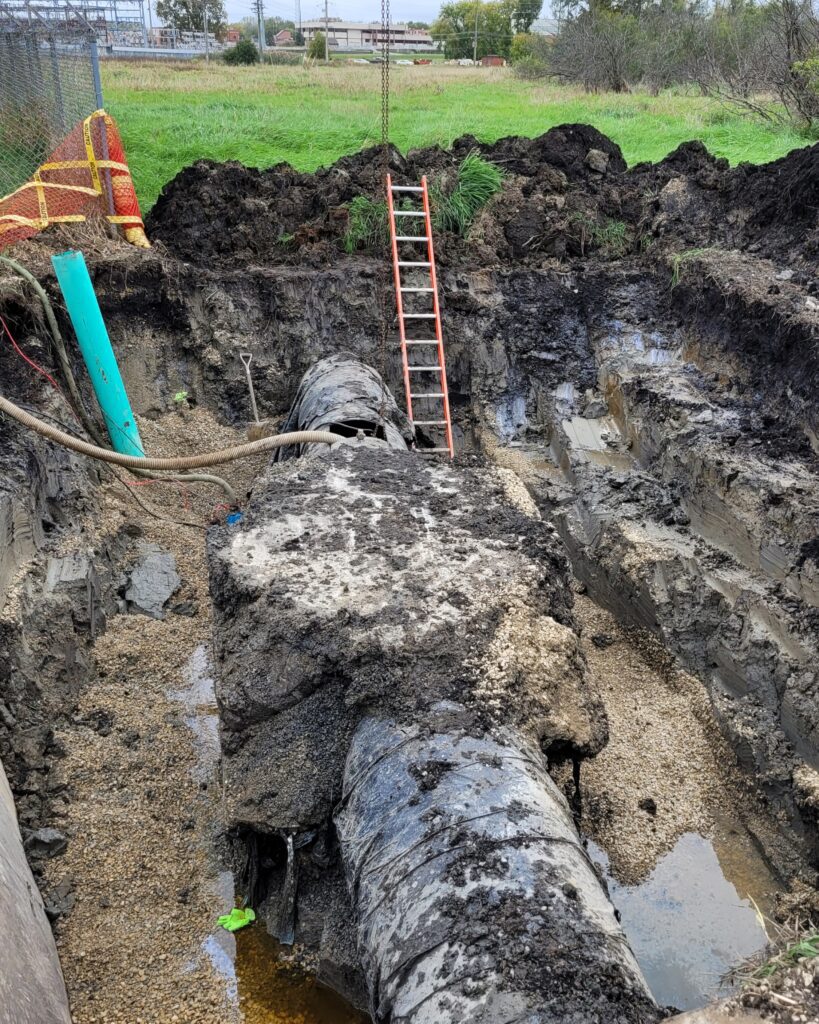
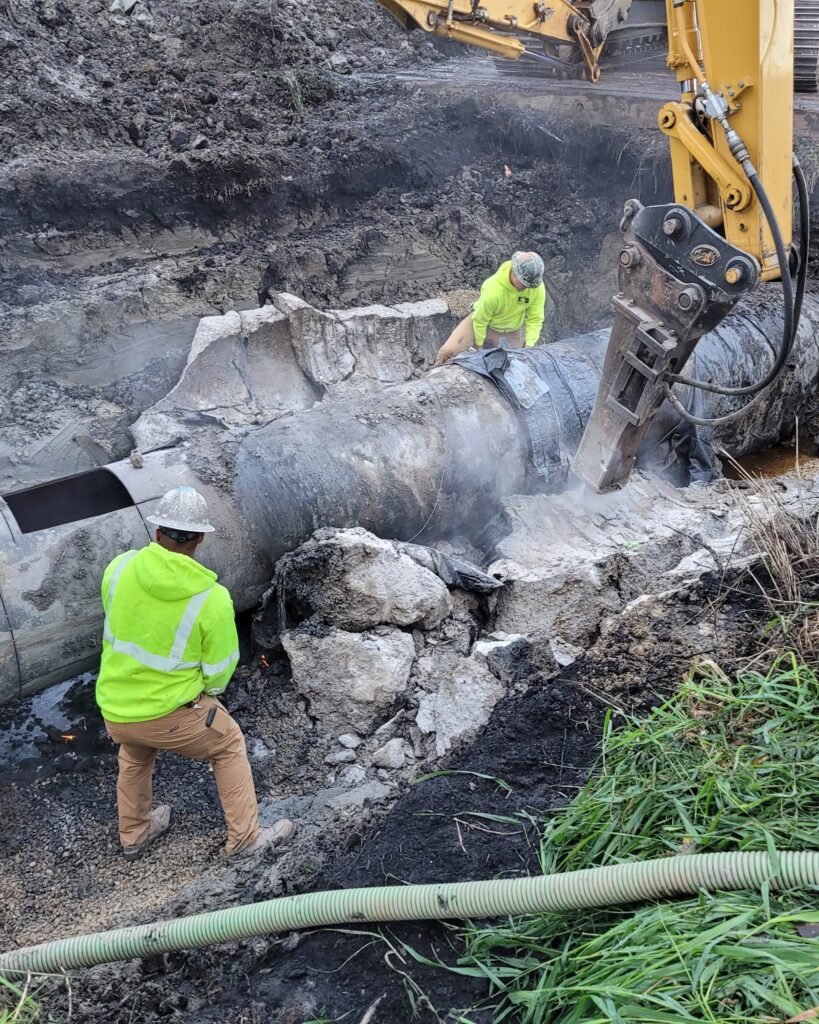
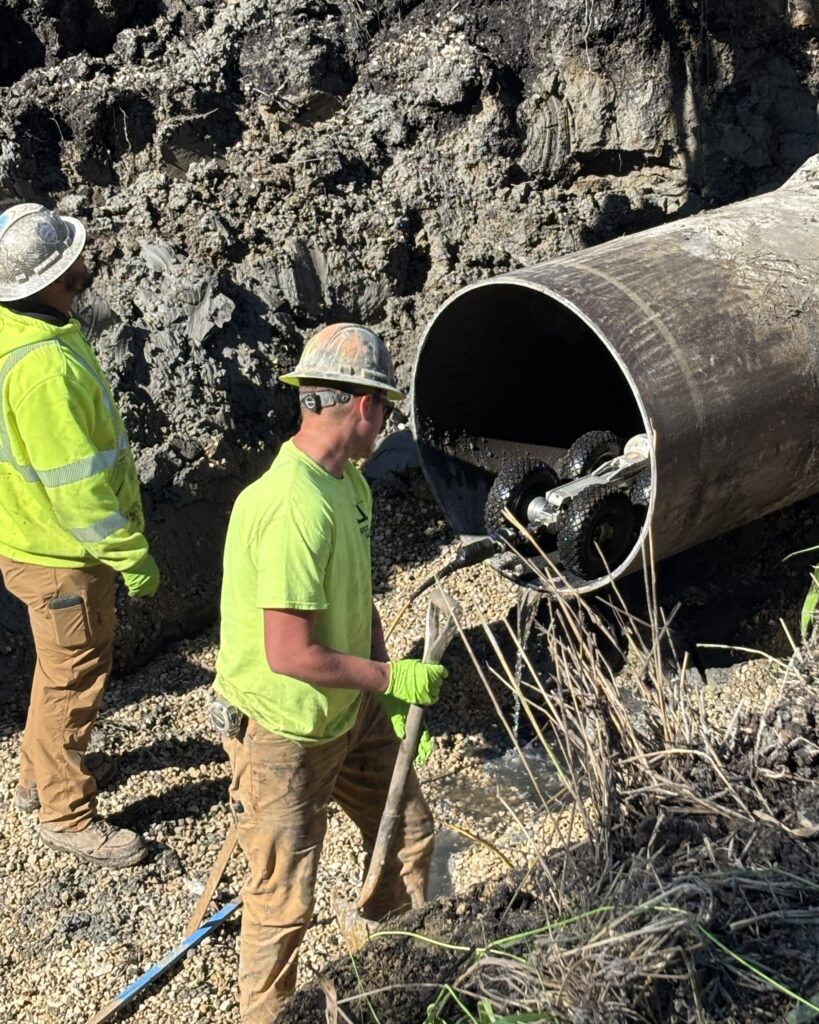
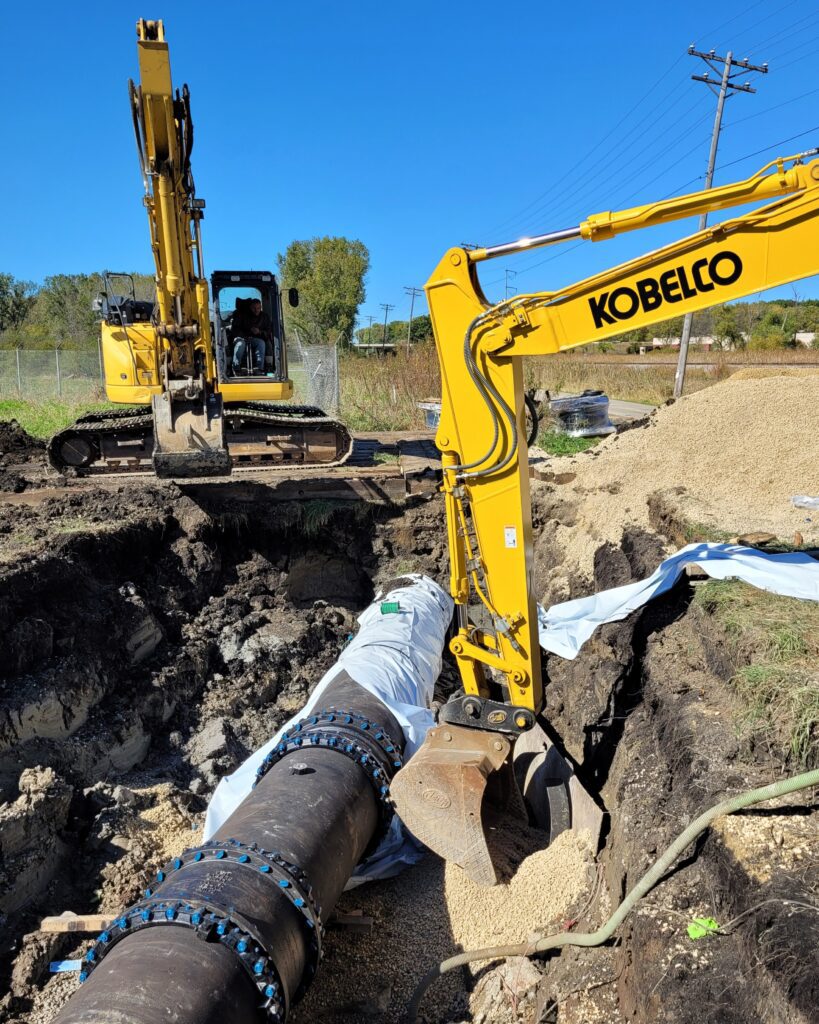
The iceberg Theran is referring to in this case is the permanent repair of the Pumping Station (PS) 2 force main break. The work of replacing the damaged pipe was an impressive sight and required preparation, skill, experience, and the ability to adapt to change. But planning and coordinating the work to drain the force main and divert its normal flow with minimal impact to the collection system – that was the extensive part that required collaboration and input from staff across District workgroups, as well as a contractor.
Refresher on the PS 2 force main break
The PS 2 force main runs beneath the wetland area on the north side of the District’s treatment plant, alongside the Capital City State Trail bike path. It’s one of the five force mains that bring the 37 million gallons of wastewater that we treat at the plant each day.
On Friday, August 22, 2025, a trail user called to report that water was bubbling up from the wetland. Staff investigated and assessed that there was a leak in the PS 2 force main. The District’s emergency response structure, the Incident Command System (ICS), was initiated, and members of the ICS team stayed late into the night (and some overnight) to manage the emergency repair. By early the next morning, a temporary repair clamp, surrounded by a concrete collar, was in place and the leak was stopped.
Opportunity to be proactive
Though the temporary repair was holding well, staff immediately began work to prepare for the permanent repair of the damaged pipe; however, the availability of materials and favorable weather conditions would dictate the timing of the repair.
“We were able to be proactive and not just reactive because we had the time,” says Theran, who served as one of the project leads for the repair. “We had to wait for the materials to be delivered.” The Reliability Process team worked to find suppliers who could expedite the necessary parts and supplies, which was no small task. “Stuff of this size isn’t just sitting on the shelf,” says Lisa Coleman, director of engineering. “They had to bring it in from all over the country.”
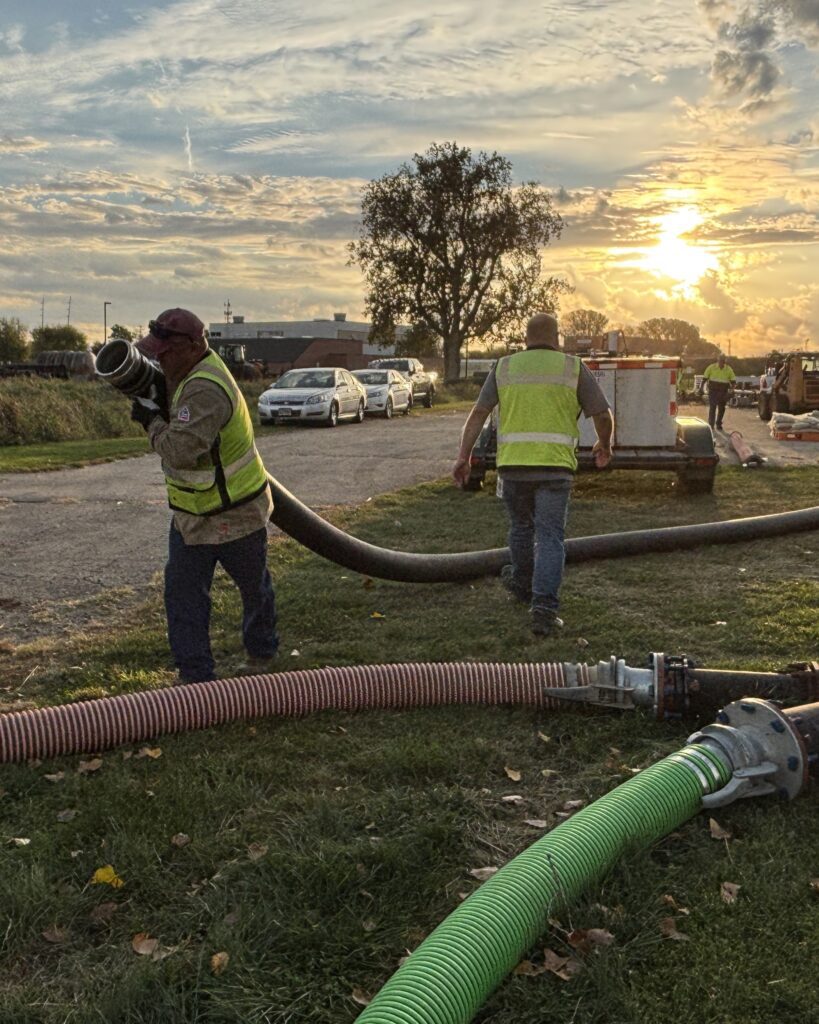
Plans also had to be made for how to drain the force main for the permanent repair. “There was about 250,000 gallons of wastewater in that pipeline that needed to be drained safely and not discharged to the environment,” says Erik Rehr, maintenance and reliability manager.
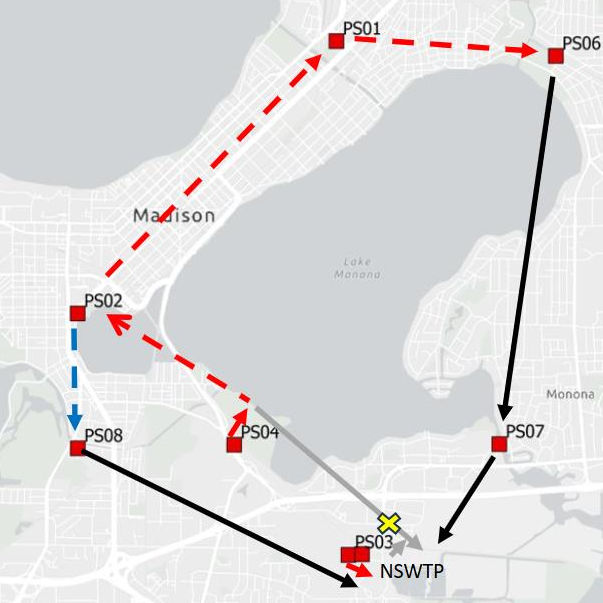
Meanwhile, weekly meetings were held with Capitol Underground, the contractor who would perform the repair, to plan, coordinate supplies and define roles. And staff from the Engineering, Planning, and Operations & Maintenance workgroups undertook the most complicated part of the repair – developing a plan to reroute manageable flow to minimize stress on other parts of the collection system. This involved a complex plan to reroute the normal flow pattern essentially backwards to achieve this.
The backwards plan
In normal operation, the three pumping stations (PS 1, 2 and 4) located upstream of the PS 2 force main repair location send flow to the plant from points in central and near-west Madison along the western portion of Lake Monona. Because of the location of the pipe repair, the flow needed to be rerouted in a backward sequence, pumping flow eastward around Lake Monona to arrive at the plant via Monona, in the PS 7 force main.
This backward pumping sequence was used briefly during the emergency repair back in August. But this time, the sequence would have to be in place for a much longer stretch of time, and the risk of wet weather or other factors affecting its stability was higher. “This sequence could not be run in wet weather,” says Theran.
Developing a thorough plan and exploring alternatives in case of the unexpected required many meetings to merge staff brain power and ideas, as well as analyze flow and pumping station capacity data.
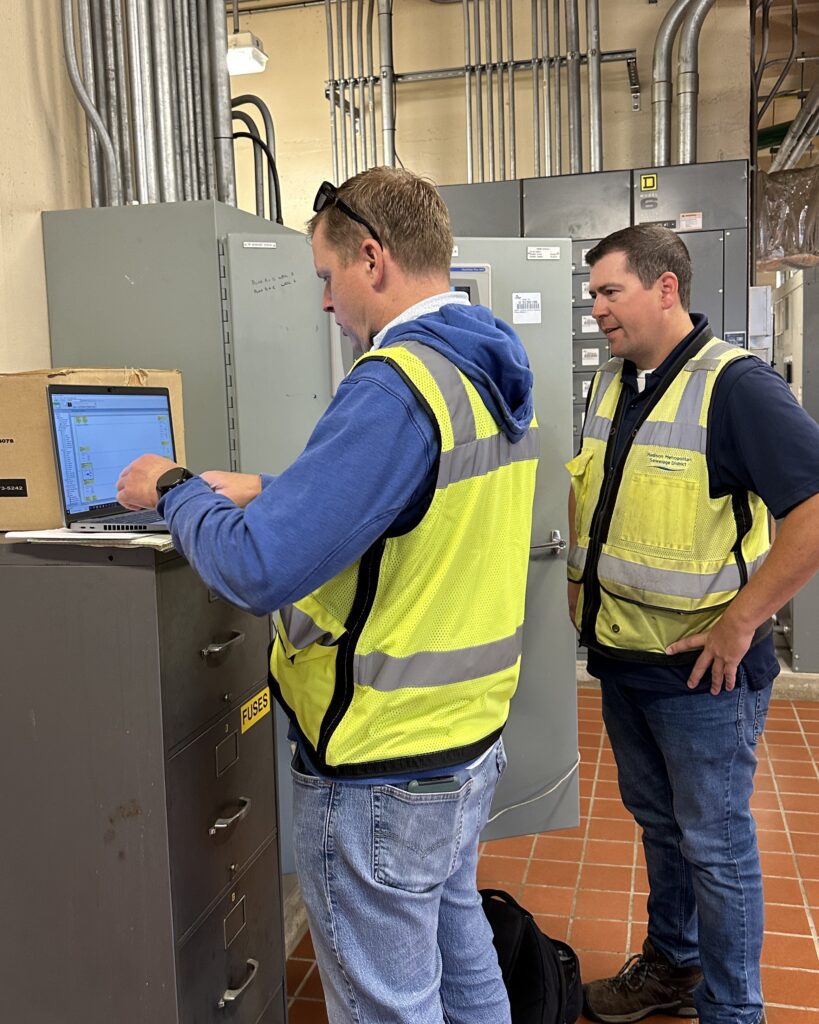
Jen Hurlebaus, the District’s director of planning and engineering, was able to run modeling scenarios of the flow sequence to help assess optimal settings for pump speeds and anticipate possible trigger points. Once the team had studied this and other data, they finalized the flow management plan and ran a half-day test to verify the implementation sequence and identify stress points to evaluate its viability.

Bringing more people to the table
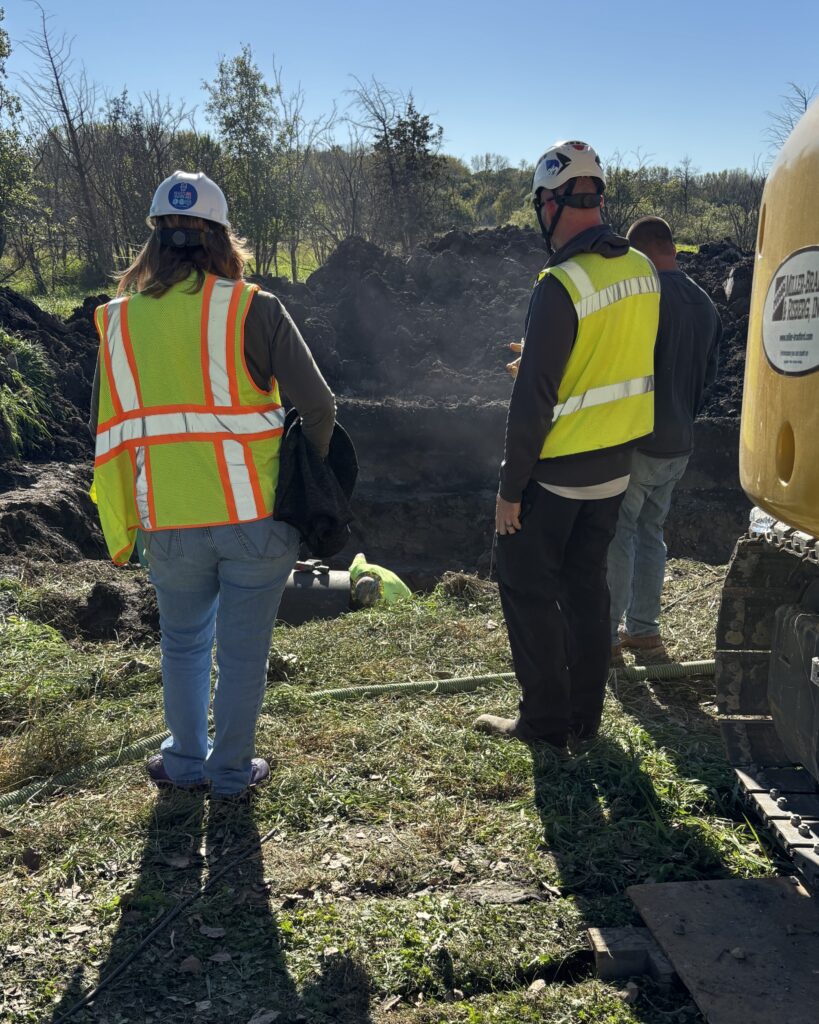
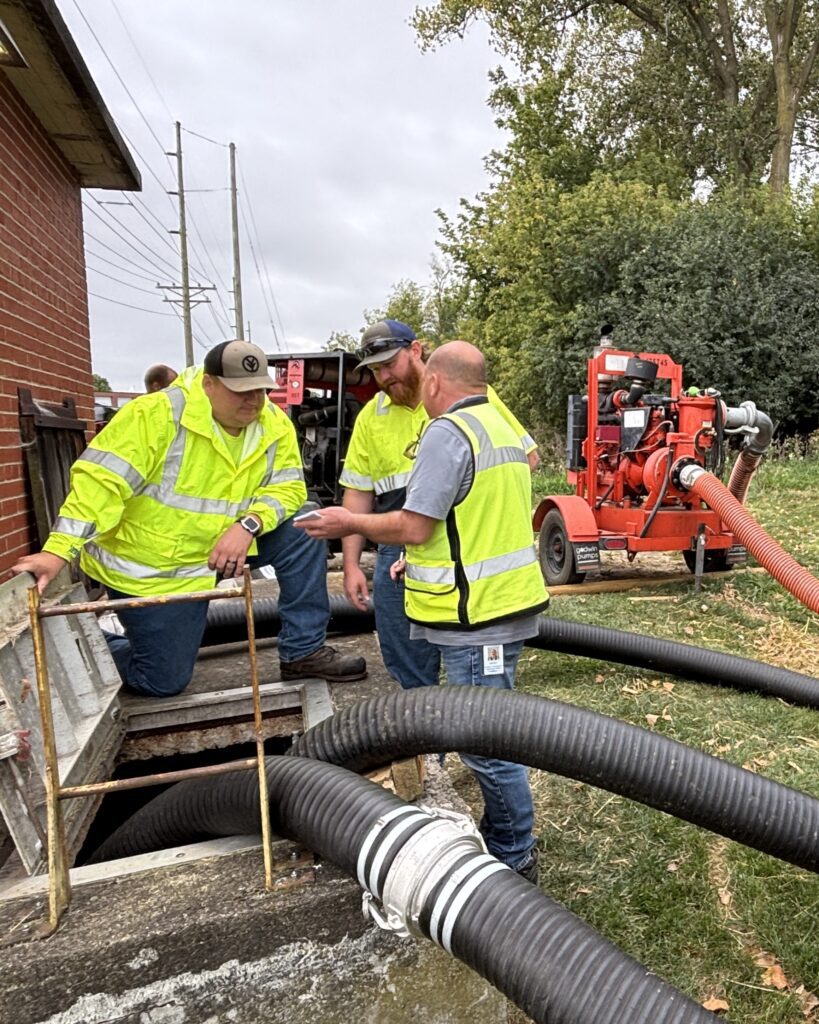
Key staff from across workgroups, as well as Capital Underground, participated in planning meetings and preparations for the repair. “Having upfront, consistent and action-based communication was needed and valuable,” says Theran. “That cross-collaboration, both internally and externally, is important.”
Theran, along with Brady Lessner, maintenance project specialist, tag-teamed the bulk of the coordination work. Brady also served as the on-site staff contact throughout the repair, coordinating communication from the field with Theran and others when needed. Theran says he and Brady worked seamlessly together: “I think that was a great example of utilizing cross-functional relationships for planning that really work.”
Brady and Theran also worked together to develop special operating procedure documents to be used during the flow reroute for each workgroup “We knew from developing the flow management plan where the triggers and risks were,” says Theran, “so we were able to create possible high-water scenarios and plan what to do.”
These “what if” procedures were presented in draft form to each workgroup so they could provide input and raise questions. “Having these documents was really helpful, and they could possibly be used in other applications,” says Lisa.
Knowledge increases when it’s shared
While not every repair will allow the ample planning time the PS 2 force main final repair had, the template is there for the ideal components to successful planning and execution. For both Lisa and Theran, the collaboration and thorough communication were the keys to success.
“The institutional knowledge and technical expertise that we have across workgroups allowed us to do this in-house,” says Theran, “which I think is rare for certain utilities.”
Part of growing that institutional knowledge is bringing people together to share it, to listen and generate ideas with those who have differing perspectives. Having meetings that involved a variety of people was key to Lisa. “Everybody working together and having a lot of different people involved is helpful,” she says. “People come up with good ideas.”
By Jessica Spiegel
Read more about our technical projects and repair efforts in Project Spotlights within the District section of our blog.
